
OLIVE OIL

Fonte Global offers supply solutions in accordance with high quality and international standards in basic food products. We contribute to the sustainable food chain with products obtained from reliable sources in the food sector, especially flour, pasta, olive oil and tomato paste.
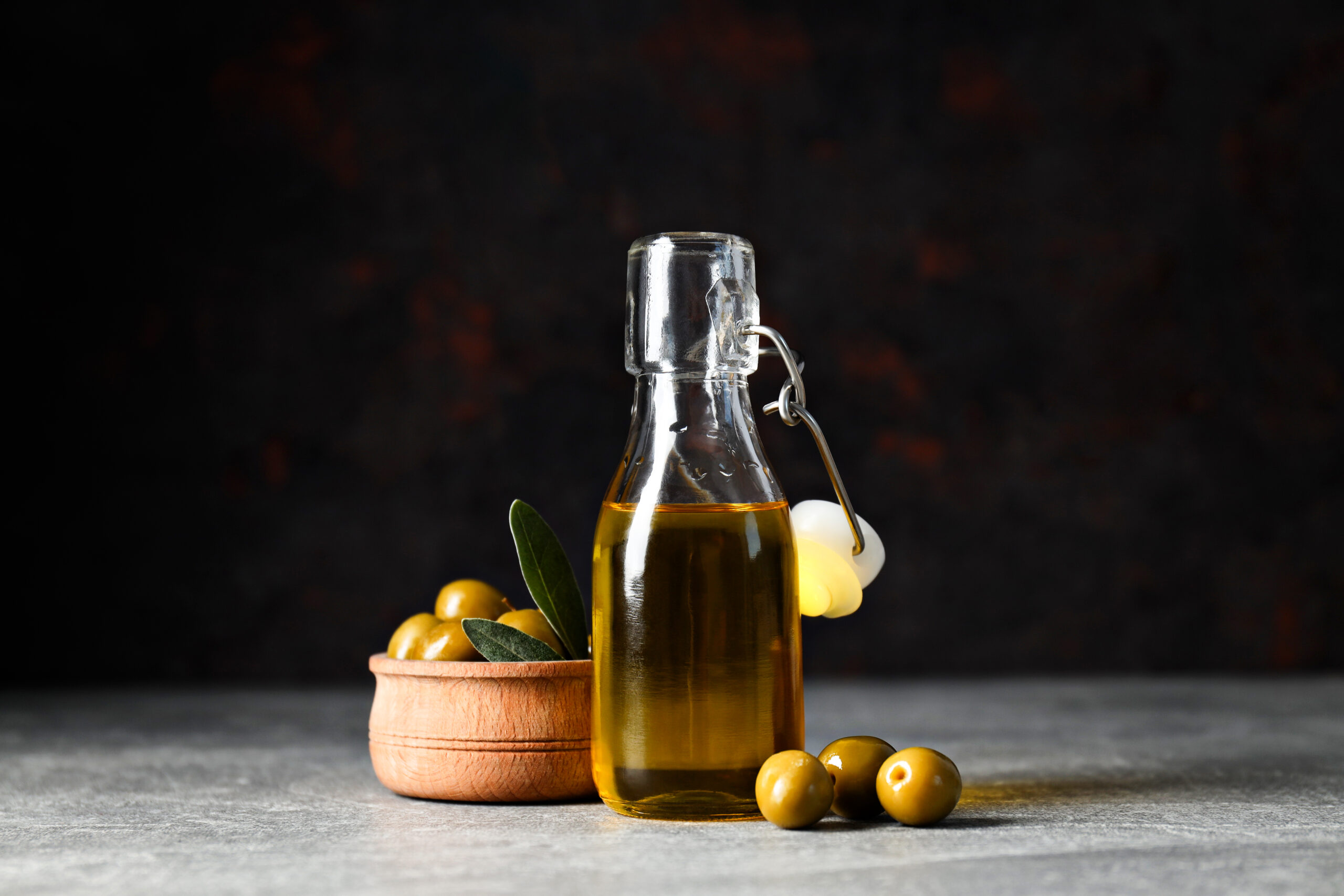
Olive Oil Supply
Your Global Solution Partner
Fonte Food offers high quality extra virgin olive oils obtained from olives grown in the fertile lands of the Mediterranean climate to the world market. Our products, produced at every step from harvest to bottling with adherence to the principles of cold pressing, low acidity and sensory quality, are a reliable source for both consumer brands and industrial supply chains.
Let's contact you for your needs.
Why Should You Supply Olive Oil from Fonte Food?
The most important advantage of supplying olive oil from Fonte Food is that it provides low-acid and high-quality products with cold-press production method and ≤ 0.8% free fatty acid guarantee. Production processes are carried out in accordance with IOC standards, EU Organic requirements and ISO and BRC certifications, while a wide range of packaging options are offered, from premium glass bottles to Horeca cans and bulk export formats. The products, which achieve sensory perfection thanks to their high fruity and balanced bitterness-burn profile, are delivered to customers through a strong global distribution network with regular shipments to Europe, the Middle East, the Far East and the Americas. In addition, end-to-end flexible production and packaging services are provided to distributors who want to produce under their own brand with the Private Label option.
Olive Oil Product Portfolio and Specifications
Extra Virgin Olive Oil
Extra virgin olive oil is in the high quality class with an acidity of ≤ 0.8% in terms of oleic acid and a free fatty acid level of ≤ 0.8 g/100 g; the peroxide number is ≤ 20 meq O₂/kg, indicating oxidation resistance. Since its polyphenol content is in the range of 250-400 mg/kg, it offers a strong antioxidant capacity. It has a balanced, rich aromatic character with fruitiness ≥ 5, bitterness ≥ 3 and bitterness ≥ 3 values in its sensory profile. The product obtained by cold pressing (≤ 27°C) is offered in premium quality standard in different packaging formats such as glass bottle (250 ml-1 L), tin (3-5 L) and 18 L metal drum.
Natural Olive Oil (Virgin Olive Oil)
Natural olive oil has a mild taste profile with an acidity value of ≤ 2.0% and is preferred in industrial production and restaurant applications thanks to its balanced flavor. It exhibits stable performance in cooking, frying and mixing formulations due to its high thermal durability; it offers an economical and functional oil solution for large-scale food operations.
Refined Olive Oil
Refined olive oil has an extremely light and stable aroma profile with an acidity level of ≤ 0.3%; thanks to the mixture of refined oil and natural olive oil, a sensory-neutral, more oxidation-resistant structure is obtained. Long shelf life and low oxidation rate ensure that the product can be used safely in canning production, in various food industry applications and in the Horeca industry.
Organic Olive Oil
Organic olive oil has EU Organic and USDA Organic certificates and is obtained from olive groves that do not use chemical fertilizers and pesticides. Its cold-pressed production maintains the natural aroma and high nutritional value while positioning the product in the premium segment. Packaging options are 500 ml and 750 ml glass bottles and offer production flexibility for private label projects.
Technical Specifications
Within the scope of the technical specifications of olive oil, the free fatty acid value is ≤ 0.8% in terms of oleic acid and is a quality indicator in accordance with the IOC and EU Reg. 2568/91 standards. Oxidation stability is ensured by keeping the peroxide number at ≤ 20 meq O₂/kg according to the ISO 3960 method. K232 and K270 values are ≤ 2.50 and ≤ 0.22, respectively, according to IOC methods, indicating that the indicators of aging and oxidative degradation of the oil are under control. While the amount of polyphenol is measured in the range of 250-400 mg/kg by HPLC analysis and the strong antioxidant capacity is verified, the moisture and volatile substance content is kept at the level of ≤ 0.2% according to the ISO 662 standard. The density value is determined in the range of 0.910–0.916 g/cm³ at 20°C by the ISO 6883 method and constitutes the physical quality parameter. The smoke point of about 190°C reflects the thermal endurance level of the oil, making it suitable for both cold consumption and light cooking applications.
Manufacturing Process
The olive oil production process starts with the early harvest carried out by hand or mechanical vibration method in the October-December period; olives are processed by cold pressing method at a maximum of 27° C and their freshness and nutritional value are preserved within a maximum of 2 hours. Particle treatment is applied at the micron level in the post-compression filtration stage. The product is protected against oxidation by being stored in stainless steel tanks under an inert nitrogen atmosphere; the filling phase is carried out with inert gas-supported systems. All batches are tested in IOC accredited laboratories for acidity, peroxide count, polyphenol profile and sensory analyses. The production process is carried out in accordance with international food safety and quality standards with ISO 22000, HACCP, BRC, Halal, Kosher and EU Organic certifications.
Packaging and Logistics
The packaging and logistics structure of olive oil products has a wide range of formats, starting with UV-protected dark glass bottles in the range of 250 ml-1 L for the premium and retail segment. In Horeca and wholesale supply channels, 3-5 L cans offer stable quality with their food-approved inner coatings, while 18 L metal drums for industrial use provide a durable transportation solution. In larger-scale procurement operations, high-volume industrial and export shipments are efficiently managed using 1,000 L IBC tanks or bulk container systems.
Sustainability and Quality Approach
Within the scope of the sustainability and quality approach, the collection of olives with an early harvest policy naturally supports the high polyphenol and antioxidant content of the product, while the use of recyclable packaging and environmentally friendly processes are applied in production facilities. With the principle of zero waste, olive pulp is evaluated in energy recovery processes and thus environmental impacts are minimized. Thanks to the traceable QR code system specific to each batch, full traceability is ensured by presenting the origin, production stages and analysis information of the product to the consumer transparently.