
SUNFLOWER OIL

Fonte Global offers high quality and internationally compliant supply solutions for basic food products. With products obtained from reliable sources in the food sector, primarily sunflower oil, olive oil, pasta and tomato paste, we contribute to a sustainable food chain.
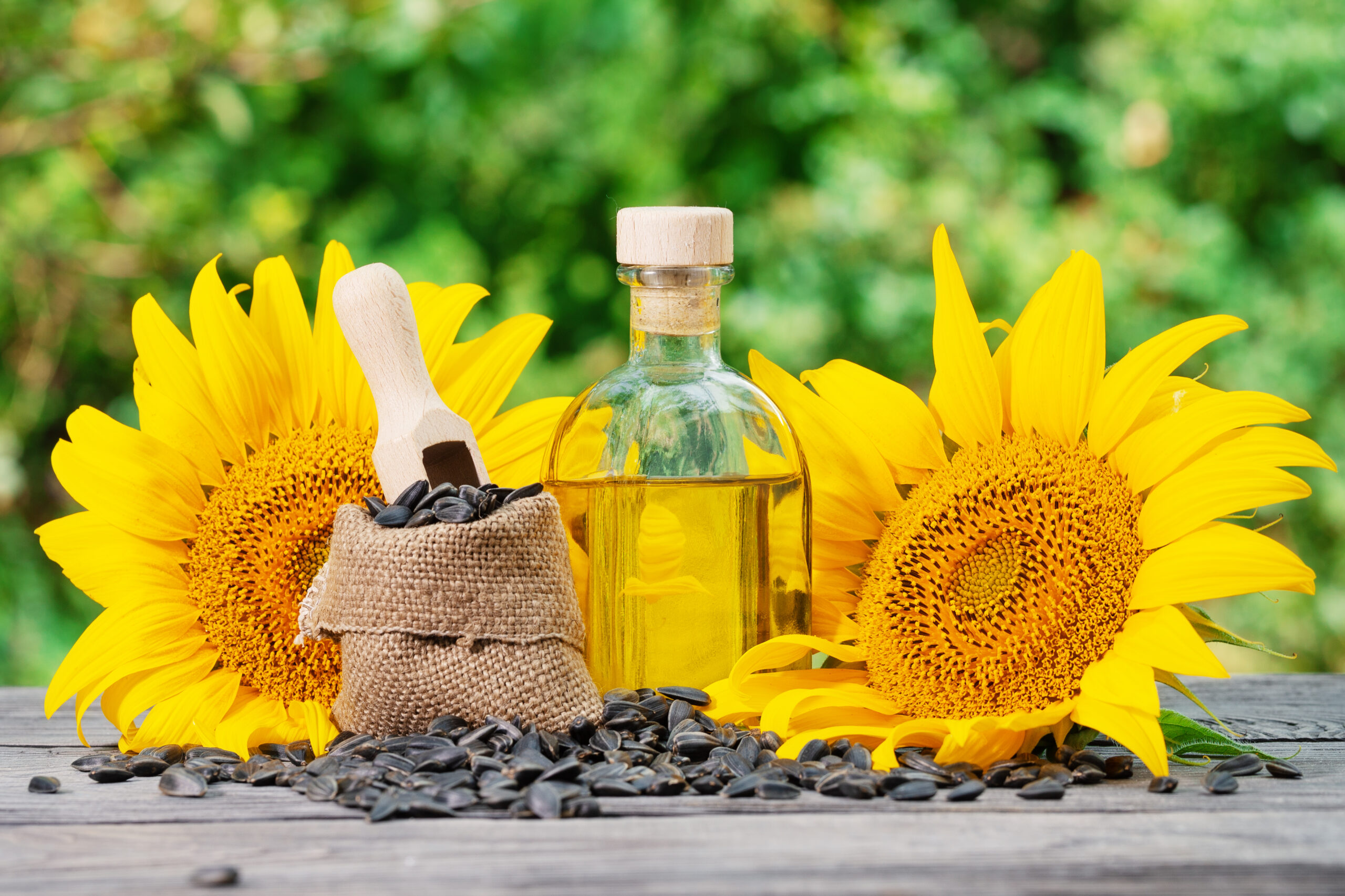
Your Global Solution Partner in Sunflower Oil Supply
Fonte Food offers high quality refined sunflower oils sourced from the world’s leading production facilities to global markets. Our products are produced by passing crude oils obtained from selected sunflower seeds through modern refining processes. Thanks to its low free fatty acid content, high oxidation resistance and neutral aroma profile, it is an ideal solution for both industrial production and the consumer market.
Let's contact you for your needs.
Why Should You Source Sunflower Oil from Fonte Food?
Fonte Food directly sources non-GMO sunflower oils with high quality standards from internationally certified producers, offering its customers reliable, sustainable and high-performance products. While producing solutions suitable for all the needs of retail, Horeca and industrial segments with oil varieties that have high oxidation resistance and long shelf life, it provides operational convenience to businesses of all sizes thanks to flexible logistics options such as bulk, IBC, barrel or packaged delivery. In addition, with its Private Label production capability, it helps distributors who want to sell under their own brand create a strong brand positioning in the market by providing professional production and packaging support.
Sunflower Oil Product Portfolio and Technical Specifications
Refined Sunflower Oil
Refined Sunflower Oil is a high quality oil with an acidity value of ≤ 0.05% in terms of oleic acid, a peroxide value maintained at ≤ 10 meq O₂/kg, Lovibond color values of 20 Y + 2.0 R, and a smoke point that can reach approximately 230°C. In addition to household use, it is suitable for various applications such as food production, frying and margarine production. Thanks to its neutral taste, high stability and long shelf life, it offers a wide range of uses.
High Oleic Sunflower Oil
High Oleic Sunflower Oil has a structure with an oleic acid content of ≥ 80% and a saturated fat content maintained at ≤ 10%. Its superior resistance to thermal oxidation makes it ideal for processes requiring high temperatures such as industrial frying, fast food production and snack food production. The product is offered in various packaging options such as 5 L tin, 18 L canister, 1,000 L IBC or bulk tanker.
Crude Sunflower Oil
Crude Sunflower Oil is produced with a free fatty acid content of ≤ 2% and a moisture-volatile matter content of ≤ 0.2%. As it is unrefined, it is particularly suitable for use in industrial processes and is utilized as a refinery input material in both export and domestic market supply.
Technical Specifications
Within the scope of the product’s technical specifications, the free fatty acid (FFA) value is ≤ 0.05% according to the ISO 660 standard, which is an indicator of oil quality. The peroxide value is determined by the ISO 3960 method and is maintained at ≤ 10 meq O₂/kg, indicating that oxidation control is ensured. The color value measured by the Lovibond method according to the AOCS Cc 13e-92 standard is 20Y + 2R, indicating the visual purity level of the product. The density value at 20°C ranges between 0.918–0.922 g/cm³ according to ISO 6883, constituting the physical quality parameter. A smoke point of approximately 230°C indicates that the product has high thermal durability, while in the fatty acid profile determined by GC analysis, the linoleic acid content is in the range of 55–65% and the oleic acid content is in the range of 25–80%, these values defining the product’s polyunsaturated fatty acid content and stability performance. The product offers a shelf life of 24 months at room conditions, ensuring long-term stability.
Manufacturing Process
Certified and non-GMO sunflower seeds are used as raw materials in the production process, and the refining stages consist of ensuring phospholipid removal by degumming process, removing free fatty acids by using NaOH in the neutralization stage, lightening the color in the bleaching stage with active clay, and finally removing unwanted odors by deodorization process carried out under vacuum. The filtration step applied after the process increases the purity of the oil by ensuring complete removal of sub-1 micron particles. While each production batch is subjected to quality control tests in terms of FFA, peroxide, color and odor parameters, ISO 22000, HACCP, BRC, Halal and Kosher certifications, which document the reliability of the product and its compliance with international standards, are applied in the production system.
Packaging and Logistics
Among the product packaging options, PET bottles offered in the volume range of 1 L–5 L for the retail segment with different brand and design alternatives; 5 L tin cans for the HORECA sector offer long shelf life and easy storage advantages. For industrial use, 18 L metal canisters catering to the restaurant and catering sectors and 1,000 L IBC tanks for large-volume export operations are preferred. Bulk tanker shipments for the refinery and general industry segment ensure high-volume logistics efficiency.
Sustainability and Quality Approach
Within the scope of the sustainability and quality approach, the oils used in production are obtained entirely from non-GMO seeds, while recyclable packaging systems are preferred in order to reduce environmental impact. Energy-efficient technologies are used in refining facilities to carry out production processes with low carbon emissions. In addition, with the understanding of a fully traceable supply chain, all stages from seed to filling are kept under control, thereby guaranteeing both food safety and sustainable quality standards.